Marma Therapy in Ayurveda: Meaning, Benefits & How It Heals Naturally
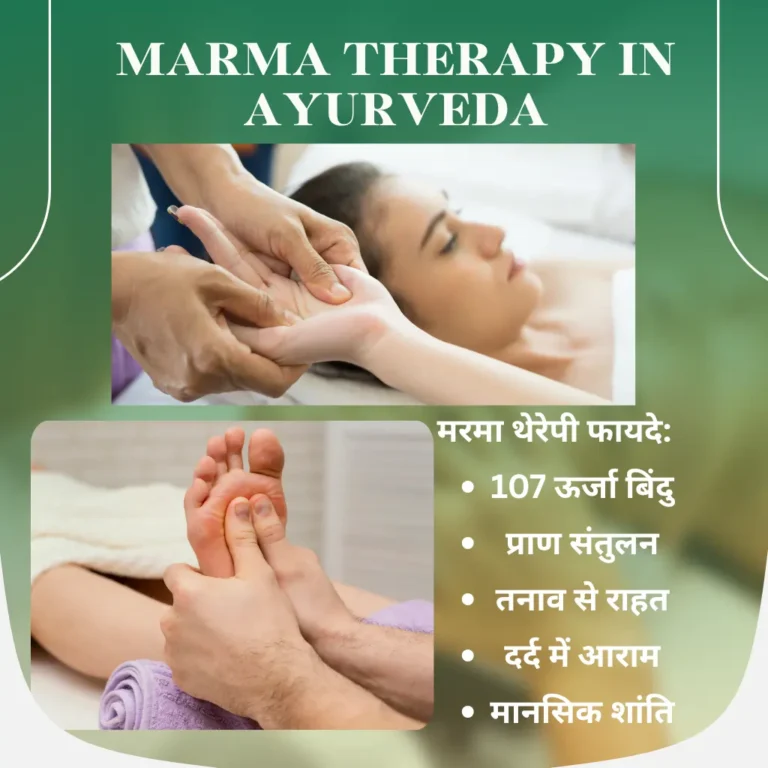
Marma Therapy in Ayurveda. Known as one of the oldest touch-based therapies, it works on 107 vital energy points in the body to restore balance, release blocked energy, and promote natural healing.
This unique Ayurvedic therapy combines anatomical knowledge with the subtle science of Prana (life force), offering profound benefits for the mind, body, and spirit. Today, Marma Therapy in Ayurveda is gaining global attention as an effective, non-invasive approach for stress relief, pain management, and emotional well-being.
Also Read: Marma Therapy Introduction and Procedure
What is Marma Therapy?
The word “Marma” comes from Sanskrit and means hidden or secret. These Marma points are special spots in the body where muscles, veins, ligaments, bones, and joints meet. They are not just physical points – they are also the places where Prana, the vital life force, is present in abundance.
According to Ayurveda, these points act like energy doors. When energy gets blocked in these areas, it can lead to pain, stiffness, stress, or even illness. By gently stimulating these Marma points through soft touch or massage, the energy starts flowing freely again. This process helps to:
-
Remove energy blockages that cause discomfort
-
Improve blood circulation for better nourishment of tissues
-
Balance the Doshas (Vata, Pitta, Kapha) for overall harmony
-
Promote physical, mental, and emotional well-being
Marma Therapy is not just another massage technique. It’s an ancient, subtle, and powerful method of energy healing that connects the body, mind, and spirit.
Historical Background
Marma Therapy has a history that goes back thousands of years. It is described in the ancient Ayurvedic texts, especially in the Sushruta Samhita, which is one of the oldest medical treatises in the world. These texts explain the location, importance, and function of Marma points in detail.
What makes Marma Therapy even more fascinating is its connection with Kalari Payattu, the traditional martial art of Kerala. Kalari was not just about fighting—it was a complete system of physical training, healing, and spiritual discipline. The warriors who practiced Kalari were also trained in Ayurveda. They knew how to use Marma points in two opposite ways:
-
To heal injuries and revive energy after battle
-
To disable or injure an opponent by targeting sensitive points
This knowledge shows the true power of Marma points. When touched in the right way, they can restore health and energy. But if harmed, they can cause serious damage—even death in some cases. This is why Marma points were considered sacred and this wisdom was passed on only to those who were trusted and ready to learn.
What Are Marma Points?
Marma points are special energy spots in the body where life force, or Prana, is concentrated. According to Ayurveda, these points act like energy hubs that influence nearby organs, tissues, and even mental well-being.
There are 107 main Marma points in the human body (some texts include one extra point, making it 108). These points are not random—they are located at junctions where muscles, ligaments, bones, joints, and blood vessels meet.
What Makes Marma Points Unique?
-
Number: 107 main points
-
Location: Found where different body tissues connect
-
Size: Measured in anguli pramana (finger-widths), which is based on the person’s body size
-
Difference from Acupuncture: Unlike acupuncture points, which follow meridian lines, Marma points are larger and connected to Pranic flow in the Ayurvedic system
Classification of Marma Points
Marma points are grouped according to their location and function:
-
Shira Marmas: Found on the head, related to brain functions
-
Hridaya Marmas: Connected to the heart and circulatory system
-
Gulpha Marmas: Located near the ankles
-
Kshipra Marmas: Found in the hands and feet
Each Marma point has its own unique role in keeping the body healthy, balanced, and energized. Stimulating them properly can support healing, while injuring them can cause harm—this is why ancient texts call them hidden secrets.
How Does Marma Therapy Work?
Marma Therapy works by gently activating the body’s energy points to restore balance and improve overall health. These energy points, called Marmas, control the flow of Prana (life force) throughout the body. When energy is blocked, it can cause pain, stress, or illness. Stimulating these points helps release the blockages and allows energy to move freely again.
How Is It Done?
Marma Therapy uses very gentle techniques, making it a safe and relaxing treatment. Some common methods include:
-
Mild Touch or Circular Massage: Soft pressure is applied to specific Marma points to release tension and restore energy flow.
-
Application of Herbal Oils: Special Ayurvedic oils like Ksheerabala Taila, Dhanwantharam Taila, or Mahanarayana Taila are used. These oils help nourish the body, reduce pain, and enhance relaxation.
-
Breathing Practices: Deep breathing or Pranayama is often combined with Marma Therapy for a calming effect on the mind and nervous system.
The best part? Marma Therapy is highly personalized. Your therapist will choose the points and techniques based on your Prakriti (natural constitution) and Vikriti (current imbalance). This ensures that the therapy supports your unique health needs.
Read More: Leech Therapy in Ayurveda
Benefits of Marma Therapy
Marma Therapy is best known for its ability to heal naturally and bring deep relaxation to the body and mind. By gently stimulating the body’s vital energy points, it restores balance and supports overall well-being. Here are some of the most important benefits:
-
Relieves Stress and Promotes Relaxation
Marma Therapy calms the nervous system, helping you feel peaceful and centered. It reduces anxiety and is perfect for managing everyday stress. -
Helps with Pain Management
It is highly effective for headaches, neck pain, back pain, joint stiffness, and arthritis. The gentle touch and herbal oils relax muscles and reduce discomfort naturally. -
Improves Blood Circulation
By activating energy points, Marma Therapy boosts circulation and helps in flushing out toxins from the body. This supports tissue nourishment and overall vitality. -
Enhances Mental Clarity
Regular sessions can improve focus, sharpen memory, and balance emotions, making it great for students, professionals, and anyone under mental strain. -
Restores Energy Flow
Blocked energy causes fatigue and imbalance. Marma Therapy helps release these blockages and restores the free flow of Prana, leaving you energized and refreshed. -
Promotes Better Sleep
If you struggle with insomnia or restless nights, Marma Therapy can calm your mind and prepare your body for deep, restful sleep.
Conditions Marma Therapy Can Help With
Marma Therapy is a natural and holistic approach that can support healing for many common health problems. While it is not a replacement for medical treatment, it works as an excellent complementary therapy to restore balance and promote recovery.
Some conditions where Marma Therapy is especially helpful include:
-
Chronic Pain
Issues like back pain, neck pain, and joint stiffness often improve with Marma Therapy because it relaxes muscles, reduces inflammation, and improves blood circulation. -
Migraine and Headaches
Gentle stimulation of Marma points in the head and neck can relieve tension, calm the mind, and reduce the frequency of headaches. -
Anxiety, Depression, and Emotional Stress
Marma Therapy supports mental health by soothing the nervous system and releasing emotional blockages, which helps reduce stress and anxiety naturally. -
Digestive Problems
Activating specific Marma points can improve digestion and metabolism, making it useful for issues like indigestion or bloating. -
Fatigue and Weak Immunity
Regular Marma sessions restore energy flow, fight fatigue, and strengthen the body’s natural defense system.
Marma Therapy vs. Acupressure
Many people compare Marma Therapy with Acupressure because both involve working on specific points in the body to promote healing. However, they are based on different systems and principles.
| Feature | Marma Therapy | Acupressure |
|---|---|---|
| Origin | Rooted in Ayurveda (India) | Based on Traditional Chinese Medicine |
| Number of Points | 107 Marmas | 300+ points |
| Energy Concept | Works on Prana (life force) | Works on Qi (energy) |
| Approach | Gentle touch, massage, and oils | Firm pressure on points |
Key Difference:
While both therapies aim to restore energy balance, Marma Therapy focuses on the flow of Prana and uses a gentle, nourishing approach, often combined with herbal oils and breathing techniques. Acupressure, on the other hand, uses stronger pressure and follows the meridian lines of Chinese medicine.
Modern Applications of Marma Therapy
This is no longer just an ancient healing secret – it has found its place in modern wellness practices worldwide. Today, it is widely used in holistic health programs, yoga studios, spas, and Ayurveda centers. Here are some popular ways Marma Therapy is applied:
-
Yoga and Breathwork
Combining Marma Therapy with Yoga enhances the benefits of Asanas (postures) and Pranayama (breathing exercises). By activating Marma points during yoga practice, energy flow improves, and the body feels more balanced and flexible. -
Massage Therapy
Adding Marma techniques to traditional Ayurvedic massages like Abhyanga takes the experience to a deeper level. It not only relaxes muscles but also balances energy, making it a complete mind-body therapy. -
Panchakarma Detox
During Ayurvedic detox programs, Marma stimulation helps in releasing toxins and improving lymphatic drainage. This speeds up the cleansing process and improves overall vitality. -
Emotional Healing
Many Marma points store emotional stress. Gentle touch on these points can help release trauma, reduce anxiety, and bring a sense of calm and mental clarity. -
Wellness Centers and Spas
Authentic Ayurvedic spas often include Marma Therapy as part of their treatments because it delivers relaxation, rejuvenation, and a deep sense of inner harmony without using invasive techniques.
Training in Marma Therapy
If you are a wellness professional or someone interested in holistic healing, Marma Therapy training can be an excellent skill to learn. Many Ayurveda academies and wellness centers offer specialized programs that teach both theory and practical application of Marma Therapy.
What Does Training Include?
-
Learning the 107 Marma Points: Their exact locations, functions, and the organs or systems they influence.
-
Safe Stimulation Techniques: How to apply the right amount of pressure, duration, and use of oils without causing harm.
-
Integration with Ayurveda: Understanding how Marma Therapy supports Dosha balance, Prana flow, and overall health.
-
Energy Healing Principles: How to combine Marma work with breathing practices and meditation for deeper results.
Important Note:
In some countries or states, you may need a massage or bodywork license to practice Marma Therapy professionally. Always check local regulations before offering it as a service.
Precautions and Contraindications
It is safe for most people when performed by a trained professional. However, because these points are powerful energy centers, certain precautions must be taken to ensure safety.
Avoid Marma Therapy in the following situations:
-
Pregnancy: Especially avoid stimulation of abdominal Marma points, as it can affect uterine activity.
-
Fractures or Recent Surgeries: Applying pressure on or near injured areas can delay healing or cause pain.
-
Severe Infections or Open Wounds: Touching these areas can worsen infection and slow recovery.
-
Serious Heart or Neurological Conditions: Conditions like uncontrolled hypertension, severe heart disease, or epilepsy require medical supervision before any therapy.
Important:
Always consult a qualified Ayurvedic practitioner before starting Marma Therapy. They will assess your health condition and decide the right approach for you.
FAQs
No. It is part of Ayurveda and focuses on 107 energy points linked to Prana (life force). Acupuncture, on the other hand, is based on Traditional Chinese Medicine and works on meridian points related to Qi energy.
Yes, gentle self-touch on a few basic Marma points can help with relaxation and stress relief. However, for health conditions or full therapeutic benefits, it’s best to visit a trained Ayurvedic therapist.
It depends on the individual and the condition. For general relaxation, a few sessions may be enough. For chronic issues like pain or stress, 3 to 10 sessions are usually recommended.
No. Marma Therapy uses light pressure and gentle massage. It should feel soothing and calming, never painful.
Yes. It works very well alongside Yoga, Ayurvedic treatments like Abhyanga or Panchakarma, as well as meditation and energy healing practices.
Conclusion
Marma Therapy is more than a healing technique—it’s a bridge between body, mind, and consciousness. By awakening these vital points, we unlock the body’s natural ability to heal, rejuvenate, and restore balance.
Ready to experience the transformative power of Marma?
👉 Book your Marma Therapy session with Devkalp Ayurveda today and rediscover holistic wellness.