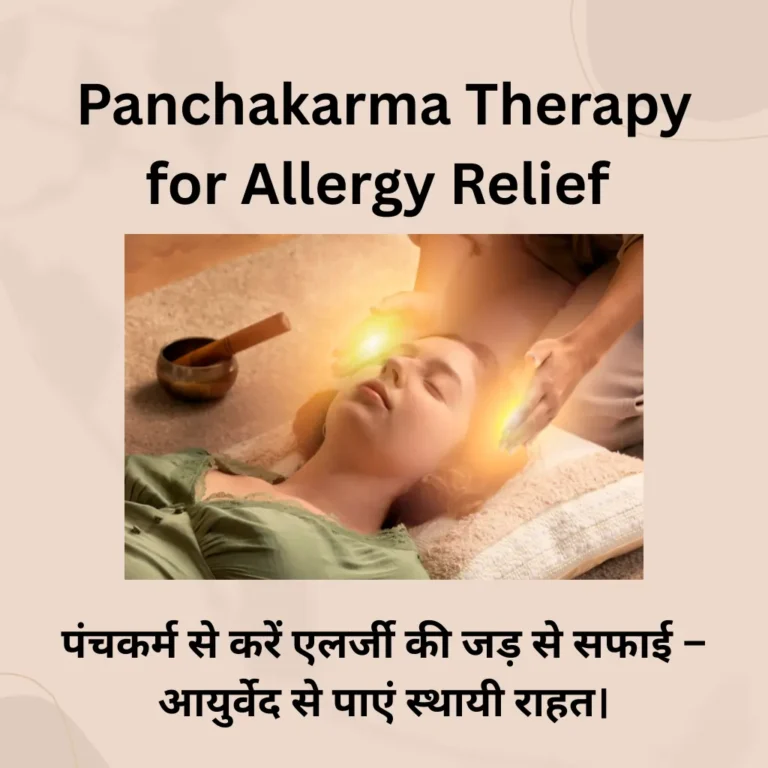
Panchakarma Therapy for Allergy Relief – A Holistic Ayurvedic Detox Approach
Panchakarma therapy for allergy relief is one of the most powerful and time-tested treatments offered in Ayurveda. Unlike temporary fixes like antihistamines or nasal sprays that only suppress symptoms, Panchakarma addresses the root cause of allergic reactions by cleansing the body of accumulated toxins (Ama), balancing the doshas (Vata, Pitta, Kapha), and restoring digestive fire (Agni). Whether it’s respiratory allergies, skin allergies, or food intolerances, Panchakarma helps detoxify the system and boost immunity for lasting relief.
In this article, we’ll explore how Panchakarma therapy works, which allergies it treats, the stages involved, safety guidelines, and its role in preventing recurrence of allergy symptoms.
What Causes Allergies According to Ayurveda?
Ayurveda believes that allergies arise from an imbalance of the doshas, impaired digestive fire (Agni), and accumulation of toxins (Ama) in the body. When your system cannot digest certain substances properly, they are turned into Ama, which obstructs body channels (Srotas) and triggers hypersensitive immune reactions.
Over time, these undigested residues weaken Ojas (immunity) and create an allergic constitution. For example:
-
Kapha-dominant allergies cause nasal congestion, sinusitis, cough, asthma
-
Pitta-dominant allergies lead to hives, skin rashes, itching, inflammation
-
Vata-dominant allergies trigger dryness, sneezing, anxiety, insomnia
Modern medications suppress the allergic response, but Panchakarma purifies the entire system, improves metabolism, and strengthens your immune intelligence.
How Panchakarma Works for Allergy Relief
Panchakarma consists of five therapeutic cleansing procedures that remove deep-seated toxins from tissues and restore equilibrium. Here’s how it helps in allergy relief:
-
Cleanses the respiratory and digestive channels
-
Eliminates Ama (toxins) that trigger hypersensitivity
-
Balances doshas involved in allergic reactions
-
Rejuvenates Ojas, the core of immunity
-
Improves absorption and metabolism, reducing food-based allergic triggers
Types of Allergies Treated by Panchakarma
Panchakarma is suitable for a wide range of allergy types, including:
1. Respiratory Allergies
-
Allergic rhinitis
-
Chronic sinusitis
-
Bronchial asthma
-
Hay fever
-
Dust and pollen allergy
2. Skin Allergies
-
Urticaria (hives)
-
Eczema
-
Psoriasis (where allergy is a trigger)
-
Contact dermatitis
3. Food Allergies and Intolerances
-
Gluten sensitivity
-
Dairy intolerance
-
Bloating and gas after specific foods
-
Gut hypersensitivity
4. Seasonal Allergies
-
Sneezing and cold due to weather changes
-
Allergies triggered by humidity, dryness, or temperature shifts
Key Panchakarma Procedures for Allergy Relief
1. Vamana (Therapeutic Emesis)
-
Especially effective for Kapha-related respiratory allergies.
-
Clears excessive mucus, cough, and congestion.
-
Performed after internal oleation and steam therapy.
2. Virechana (Purgation Therapy)
-
Recommended for Pitta-induced skin allergies, urticaria, or rashes.
-
Cleanses liver and small intestines.
-
Helps eliminate excess bile and inflammatory toxins.
3. Nasya (Nasal Medication)
-
Directly treats nasal allergies, sinusitis, and rhinitis.
-
Medicated ghee or herbal oil is instilled in the nostrils.
-
Cleans the head region and strengthens sensory organs.
4. Basti (Medicated Enema)
-
Targets Vata imbalance, which causes dryness, bloating, or gut-related allergic responses.
-
Cleanses colon and supports gut immunity.
-
Used especially in long-standing, chronic allergies.
5. Swedana (Sudation Therapy / Steam)
-
Opens the channels (Srotas) clogged by Ama.
-
Reduces stiffness and coldness in the body.
-
Supports detoxification and eases respiratory discomfort.
Pre-Panchakarma Preparations
The Panchakarma journey includes preparatory stages called Purva Karma, which are critical for a successful detox:
-
Deepana-Pachana – Strengthening digestive fire using herbs like Trikatu
-
Snehana – Internal and external oleation with medicated ghee or oil
-
Swedana – Steam therapy to loosen toxins before elimination
These preparatory steps make the body ready to release stored toxins from tissues during the main Panchakarma process.
Who Should Consider Panchakarma for Allergy Relief?
Panchakarma therapy is ideal for:
-
Individuals with chronic respiratory allergies or asthma
-
Patients suffering from recurring skin conditions due to allergens
-
People with weak digestion and frequent food intolerances
-
Those looking for drug-free, natural healing for allergy symptoms
-
Individuals interested in boosting long-term immunity
However, it’s not suitable for children under 7, pregnant women, extremely weak individuals, or during active infection unless customized by a certified Ayurvedic doctor.
Post-Panchakarma Lifestyle & Diet (Paschat Karma)
After Panchakarma, the body is sensitive and must be nourished and stabilized properly to maintain results.
-
Follow a light, sattvic diet (khichdi, rice, vegetable soups)
-
Avoid allergens and heavy, processed, or incompatible foods
-
Practice daily pranayama and gentle yoga
-
Take Rasayana herbs like Chyawanprash or Ashwagandha to build immunity
This post-care ensures that the benefits of detox last longer and your system remains strong against allergens.
Conclusion
Panchakarma therapy for allergy relief is not just a detox—it is a complete internal reset. By removing toxins, balancing doshas, and restoring digestive fire, Panchakarma offers a long-term solution to allergies that modern medicine often fails to provide.
Rather than managing symptoms temporarily, Ayurveda focuses on healing the root cause so that your body can naturally defend itself against allergens. With regular Panchakarma and supportive diet, lifestyle, and herbs, you can live allergy-free and with stronger immunity.
Frequently Asked Questions (FAQs)
Depending on severity, a full Panchakarma detox takes 7–21 days. Some patients see significant symptom relief within the first week.
Yes, seasonal Panchakarma during Ritu Sandhi (season change) helps strengthen immunity and reduce recurrence of seasonal allergic symptoms.
Absolutely. With expert guidance, therapies like Virechana and Basti can be very effective for chronic skin conditions linked to Pitta and Kapha dosha.
When done under professional supervision, Panchakarma is safe. Mild fatigue, detox symptoms like loose stools or sleepiness may occur initially, but these are signs of toxins being eliminated.