
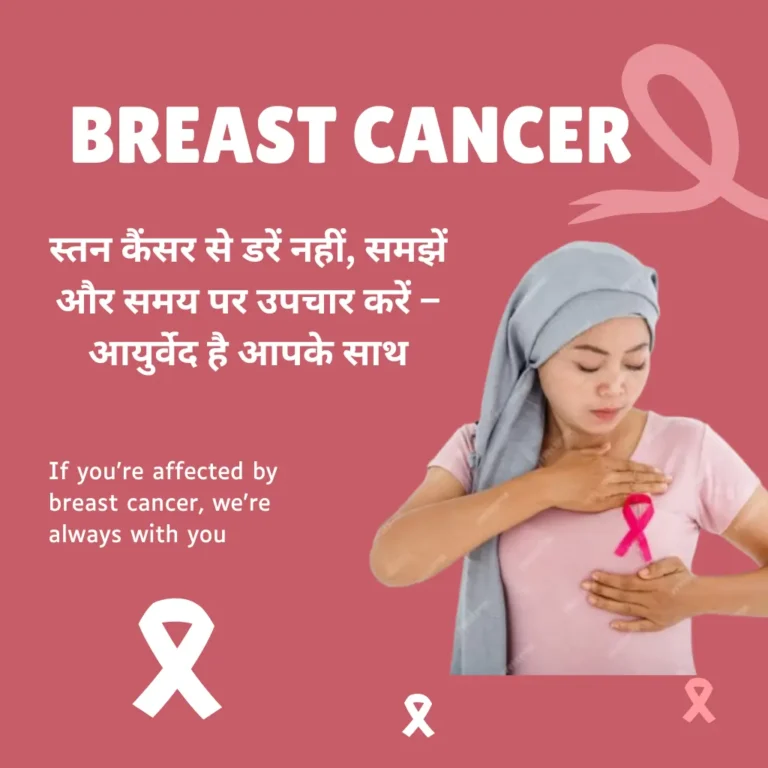
Breast Cancer: Causes, Symptoms, Diagnosis & Ayurvedic Support for Holistic Healing
Introduction: Breast Cancer in the Modern World
Breast cancer is the most commonly diagnosed cancer in women across the globe. It accounts for nearly 1 in 8 cancer diagnoses among women. In India, it has overtaken cervical cancer as the leading cause of cancer-related deaths among women. The disease arises from abnormal cell growth in the breast tissue and can vary in severity, from localized tumors to advanced stages involving distant organs.
While modern medicine offers multiple treatment options such as surgery, chemotherapy, radiation, and targeted therapies, Ayurveda—India’s traditional system of medicine—can play a complementary role in prevention, side-effect management, immune support, and emotional well-being. This blog explores the complete picture of breast cancer: its causes, symptoms, stages, diagnosis, and how Ayurveda can be integrated into a holistic care strategy.
What Is Breast Cancer?
Breast cancer originates in the cells of the breast, usually in the ducts (which carry milk) or lobules (which produce milk). In many cases, these cells form a lump or mass that can be benign (non-cancerous) or malignant (cancerous).
There are different types of breast cancer:
- Ductal Carcinoma In Situ (DCIS) – Early stage, confined to milk ducts.
- Invasive Ductal Carcinoma (IDC) – The most common type; spreads to surrounding tissue.
- Invasive Lobular Carcinoma (ILC) – Starts in lobules and invades nearby tissues.
- Triple-negative breast cancer – Does not have estrogen, progesterone, or HER2 receptors, making it harder to treat.
- Inflammatory breast cancer – Aggressive and fast-growing, often misdiagnosed as infection.
Causes and Risk Factors
The exact cause of breast cancer is multifactorial, involving a combination of genetic, hormonal, environmental, and lifestyle elements.
1. Genetic and Hereditary Factors
- BRCA1 and BRCA2 gene mutations
- Family history of breast or ovarian cancer
- Inherited conditions like Li-Fraumeni syndrome
2. Hormonal and Reproductive Factors
- Early menstruation (before age 12)
- Late menopause (after age 55)
- Not having children or having them later in life
- Hormone replacement therapy (HRT)
3. Lifestyle and Environmental Factors
- High-fat, low-fiber diet
- Obesity and physical inactivity
- Alcohol and tobacco use
- Exposure to radiation and certain chemicals (like BPA)
- Chronic stress and sleep deprivation
4. Psychological and Emotional Factors (Ayurvedic View)
In Ayurveda, prolonged mental stress, unresolved emotions, and lifestyle disharmony are believed to weaken the body’s immunity and disturb doshic balance, particularly of Kapha and Vata.
Signs and Symptoms
Early detection significantly increases the chances of survival. Be aware of the following warning signs:
- A lump or thickening in the breast or underarm
- Change in size, shape, or appearance of the breast
- Nipple inversion or discharge (especially bloody)
- Skin changes such as dimpling, redness, or scaling
- Pain in the breast or nipple
- Swelling, warmth, or itchiness
Note: Many benign breast conditions can mimic these symptoms. It is essential to get them evaluated by a healthcare professional.
How Is Breast Cancer Diagnosed?
1. Self-Examination
Women should perform monthly breast self-exams a few days after their menstrual cycle ends.
2. Clinical Breast Examination
Performed by a healthcare provider to detect lumps or abnormalities.
3. Imaging Tests
- Mammogram: X-ray of the breast; recommended annually after age 40.
- Ultrasound: Used for dense breast tissue or further evaluation.
- MRI: High-risk individuals may need an MRI for detailed imaging.
4. Biopsy
A tissue sample is extracted and analyzed under a microscope to confirm malignancy.
Stages of Breast Cancer
Understanding the stage helps doctors decide the best treatment plan. The stages range from 0 to IV:
- Stage 0: Non-invasive, no spread to surrounding tissues.
- Stage I: Small tumor, limited spread.
- Stage II: Larger tumor, possibly spread to lymph nodes.
- Stage III: Spread beyond the breast to nearby lymph nodes.
- Stage IV: Metastatic cancer—spread to distant organs.
Modern Medical Treatment Options
1. Surgery
- Lumpectomy: Removal of the tumor.
- Mastectomy: Removal of the entire breast.
2. Radiation Therapy
- Kills residual cancer cells post-surgery.
3. Chemotherapy
- Drug therapy to kill rapidly dividing cells.
4. Hormonal Therapy
- For hormone receptor-positive cancers.
5. Targeted Therapy
- Drugs like Herceptin for HER2-positive cancers.
The Role of Ayurveda in Breast Cancer Care
Ayurveda doesn’t claim to cure cancer directly but can support the healing process, enhance the quality of life, and reduce treatment side effects. It focuses on:
- Detoxification (Ama elimination)
- Strengthening Ojas (vital immunity)
- Restoring doshic balance
- Emotional resilience
Ayurvedic View on Cancer (Arbuda)
Cancer is associated with “Arbuda” in classical Ayurvedic texts, where vitiated doshas (especially Kapha and Vata) cause tissue overgrowth, stagnation, and toxin accumulation.
Beneficial Ayurvedic Herbs
1. Ashwagandha (Withania somnifera)
- Adaptogen, immune booster, supports stress management
2. Curcumin (Turmeric extract)
- Anti-inflammatory, antioxidant, anti-cancer potential
3. Guduchi (Tinospora cordifolia)
- Strengthens immunity, rejuvenates body tissues
4. Tulsi (Holy Basil)
- Promotes mental calmness and cellular protection
5. Kanchanar Guggulu
- Used traditionally for glandular swelling and tumors
Always consult an Ayurvedic practitioner before starting herbal therapies, especially during conventional cancer treatment.
Panchakarma Therapies for Cancer Patients
1. Virechana (Purgation)
- Cleanses Pitta toxins and supports liver function
2. Basti (Enema Therapy)
- Rejuvenates colon, enhances Vata balance
3. Abhyanga (Oil Massage)
- Improves circulation and lymphatic flow
4. Shirodhara (Oil Dripping Therapy)
- Calms the mind and promotes restful sleep
5. Nasya (Nasal Detox)
- Supports hormonal balance and detoxification
“Panchakarma helps in detoxifying the body and boosting immunity in cancer patients.”
👉 Explore more: Panchakarma Therapy for Cancer Detox and Immune Boosting
Ayurvedic Diet Plan for Breast Cancer Recovery
Recommended Foods:
- Moong dal, rice, barley
- Steamed seasonal vegetables
- Pomegranate, papaya, apple
- Turmeric, ginger, garlic
- Warm water and herbal teas (tulsi, cumin)
Foods to Avoid:
- Red meat, alcohol, caffeine
- Processed, reheated, or stale food
- Excess salt and sugar
- Cold and carbonated drinks
Lifestyle & Emotional Support
- Practice Pranayama and Meditation daily
- Get 7–8 hours of quality sleep
- Engage in gentle yoga and nature walks
- Avoid harsh chemicals in cosmetics and cleaning agents
- Surround yourself with positivity and community support
FAQs
Ayurveda supports conventional treatment and improves well-being, but it should not replace medical oncology. No. Only 5–10% of cases are hereditary; lifestyle and environment play major roles. Early-stage breast cancer has a survival rate of over 90%. Early detection is key. Yes, though rare, men can develop breast cancer. Some herbs may interact with chemotherapy drugs. Always consult both your oncologist and Ayurvedic doctor.
Conclusion: Integrating Science and Tradition
Breast cancer is not just a physical illness—it affects the emotional, mental, and spiritual well-being of individuals and their families. Modern treatments can save lives, while Ayurveda offers a time-tested approach to support the body, mind, and spirit. The combination of both can lead to holistic healing and improved quality of life.
At Devkalp Ayurveda, we believe in empowering patients through awareness, personalized care, and natural healing methods that respect the wisdom of both science and tradition.


